AC Energy Monitor & Solid-State Protection Relay
Live Build
Working System & Interface Capture
Topology
System Schematic & Architecture
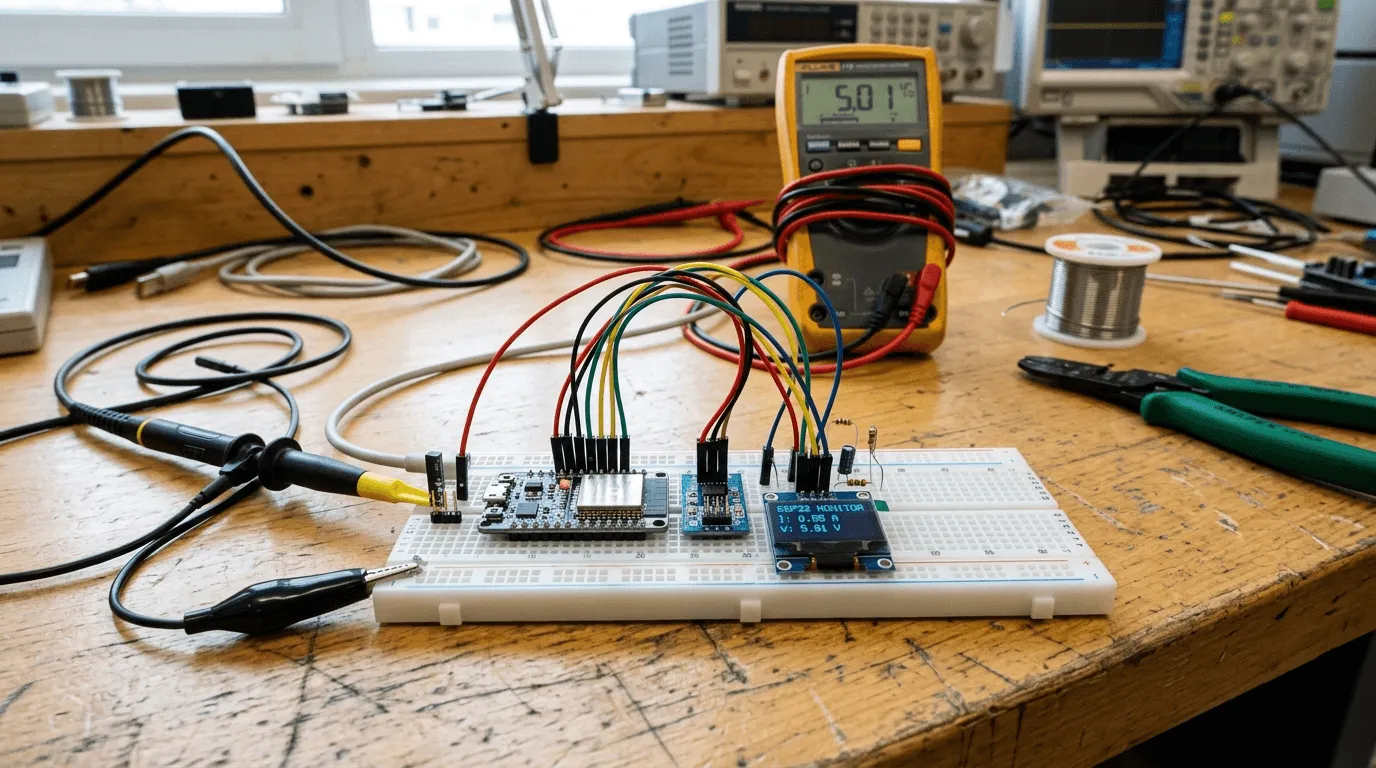
Hall-effect AC current with RC low-pass filter (R=1kΩ, C=100nF, fc=1.59kHz) + AM2302 temp/RH
Core 0: 3.2 kS/s ADC True RMS sampling with 12-pt LUT. Core 1: Wi-Fi state machine & MQTT
100kHz I2C bus with 2.2kΩ pull-ups for live Vpp/RMS screen · JSON publish over TLS
Telemetry & Bench
Additional Working Interface & Simulator Captures
Overview
Engineered a digital AC power instrumentation and fast fault-isolation prototype. Combines a precision micro-transformer for AC voltage waveforms, a Hall-effect sensor for current draw, and an opto-isolated solid-state relay to protect bench equipment against short-circuit overcurrent in under 15ms.
The Problem
Standard bench power strips lack fast, cycle-accurate electronic cutoffs for high-current surges and inductive feedback, risking damage to sensitive microcontroller power supplies during testing.
The Solution
Constructed a dual-sensor telemetry and interrupter circuit using a ZMPT101B active voltage transformer module and an ACS712-05B current module. Firmware runs on ESP32 Core 0 computing true active power (W), apparent power (VA), and power factor, triggering a DC-controlled AC solid-state relay (SSR) via PC817 optoisolator whenever instantaneous current breaches user-configured thresholds.
Key Features
Engineering Obstacles
Challenges Overcome
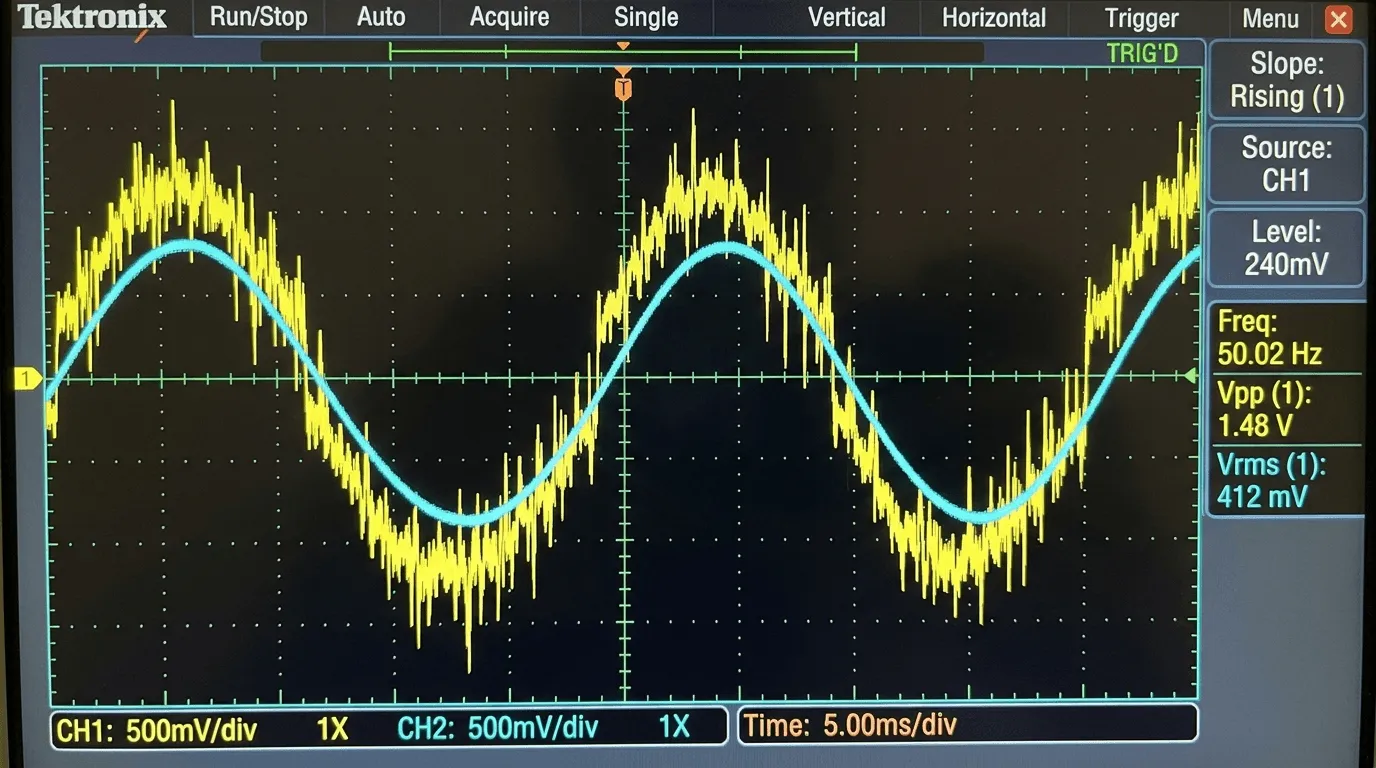
ZMPT101B op-amp introducing ~12° phase shift between line voltage and output waveform, distorting power factor calculations. Corrected via software phase-lead calibration coefficient.
Inductive kickback from switching industrial fan loads causing micro-resets. Eliminated by adding an RC snubber network (100Ω + 0.1µF) directly across SSR output terminals.
Verification & Impact
Results & Verification
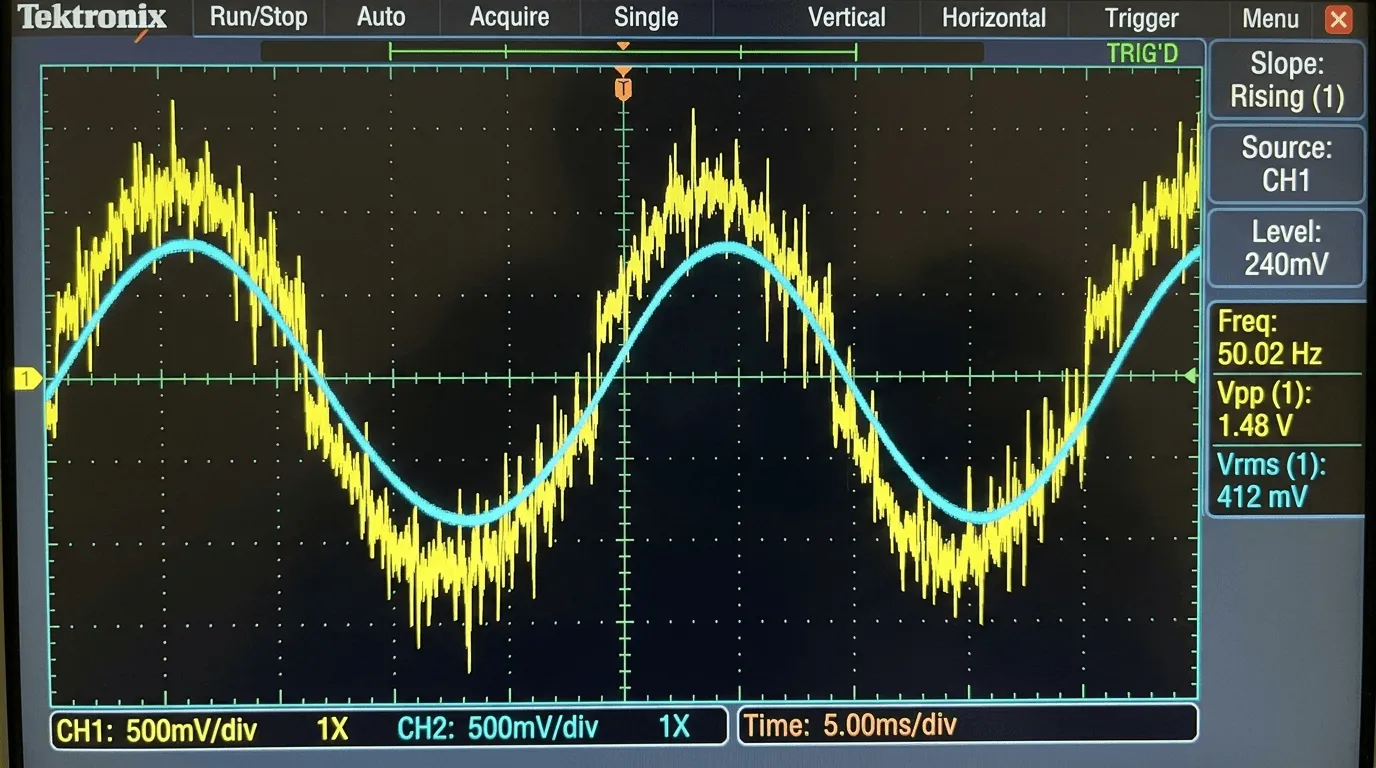
Voltage measurement accuracy within ±1.6% across 190V–245V AC utility fluctuations.
Overcurrent trip isolation completed within 12.4ms of fault injection, well within the single-cycle (20ms) safety target.
Reliable continuous operation over 72-hour burn-in test powering variable test loads.